
My Old Dog's Back Legs Are Giving Out — A Vet Explains Why and What to Do


Is your old dog's back legs collapsing or giving out? Dr. Waleed explains every cause — from arthritis to degenerative myelopathy — and what you can do at home.
You call your dog for dinner and he tries to get up — but his back legs just slide out underneath him. He looks at you, confused, then tries again. This time he makes it, but he wobbles the whole way to his bowl.
Or maybe it happened suddenly. One morning everything was fine. By evening, his hindquarters were swaying, his paws were dragging, and you were Googling in a panic trying to figure out what was happening to your dog.
I want you to take a breath. Back leg weakness in senior dogs is one of the most frightening things to witness — but it is also one of the most common things I see in older patients. And the most important thing I can tell you right now is this: it is never just old age. Something specific is causing it, and knowing what that is changes everything about what you do next.
In this guide I am going to walk you through every major reason a senior dog's back legs give out, what the warning signs look like before it gets serious, how a vet diagnoses the cause, and exactly what you can do — both medically and at home — to help your dog stay mobile and comfortable for as long as possible.
Is It Normal for an Old Dog's Back Legs to Give Out?
No. Let me be direct about this because it matters.
It is normal for senior dogs to slow down, sleep more, and be a little stiff when they first get up in the morning. What is not normal is wobbling, stumbling, dragging paws, collapsing when trying to stand, or a sudden loss of strength in the hind end. These are symptoms — signs that something is happening in your dog's joints, spine, muscles, or nervous system that needs to be investigated.
Dismissing back leg weakness as "just getting old" is one of the most common mistakes I see owners make, and unfortunately it leads to delayed treatment at a time when earlier intervention could have made a real difference. If your dog's back legs are giving out, please see a vet. This guide will help you understand what you are dealing with — but it is not a substitute for a clinical examination.
Why Is My Senior Dog's Back Legs Giving Out? The Main Causes
There is no single answer. Back leg weakness in older dogs can come from several very different problems — and the treatment depends entirely on which one it is. Here are the most common causes I see in practice.
Osteoarthritis — the most common cause
Arthritis is by far the most frequent reason senior dogs struggle with their back legs. As the cartilage inside the joints wears down over years, bones begin to rub together. This causes pain, inflammation, and stiffness — and over time, it causes the muscles around the joint to waste away from underuse. A dog in pain moves less. A dog that moves less loses muscle. Less muscle means less ability to support the joints. It becomes a cycle.
Arthritic dogs often look like their legs are giving out when what is actually happening is that the joint pain is making it impossible to bear weight properly. You will usually see this most dramatically first thing in the morning or after a long rest, when the joints have stiffened up. The dog improves after a few minutes of moving around — that pattern is a classic arthritis sign.
Degenerative Myelopathy — the one that progresses silently
Degenerative myelopathy (DM) is a disease of the spinal cord. It is progressive, it is not painful, and it is one of the most heartbreaking things I discuss with owners — because it looks like arthritis at first, but it does not respond to pain medication at all.
According to Cornell University College of Veterinary Medicine, DM causes gradual muscle wasting and loss of coordination in the hind limbs, typically starting around 8 years of age. It begins with slight wobbliness or dragging of one back paw — owners sometimes notice the nails on one side are getting worn down faster than the other. Over months it progresses to both legs, then eventually to the front limbs and bladder control.
The key distinction from arthritis: a dog with DM does not show pain when you press on their spine. Their reflexes in the back legs are often abnormal. And pain medication makes no difference to how they walk. Breeds most commonly affected include German Shepherds, Boxers, Labrador Retrievers, Pembroke Welsh Corgis, and Chesapeake Bay Retrievers — though any breed can be affected.
There is currently no cure for degenerative myelopathy. According to the Merck Veterinary Manual, no drug or supplement has been shown to alter the course of the disease. However, intensive physiotherapy and rehabilitation have been shown to slow progression meaningfully and extend the time dogs remain mobile.
Intervertebral Disc Disease (IVDD) — the sudden one
The discs between the vertebrae in your dog's spine act as shock absorbers. In older dogs — especially certain breeds like Dachshunds, Basset Hounds, Shih Tzus, and Beagles — these discs can rupture or bulge, pressing directly on the spinal cord. The result can range from back pain and wobbly walking to sudden paralysis in the back legs.
IVDD is different from DM in a very important way: it often comes on suddenly, it is usually painful, and it can sometimes be treated surgically with excellent outcomes if caught early. A dog that was walking fine yesterday and cannot use its back legs today needs to be seen by a vet as an emergency. Do not wait and see.
Hip Dysplasia
Hip dysplasia is a developmental condition where the hip joint does not form properly, causing the ball to slip partially out of the socket. While it is often diagnosed younger, the symptoms become far more severe in senior dogs as arthritis develops on top of an already unstable joint. Dogs with hip dysplasia often have a characteristic swaying walk, difficulty standing up from a lying position, and a reluctance to climb stairs or jump. They may also "bunny hop" with both back legs together when running rather than moving them alternately.
Muscle Wasting From Inactivity or Illness
Senior dogs who have been less active — whether from pain, illness, or just slowing down naturally — lose significant muscle mass in the hindquarters. Muscle loss in the rear end is visually obvious: the hips and thighs look thinner than they used to, and the dog struggles to generate the power needed to stand up, jump, or climb stairs.
This type of weakness can look exactly like a neurological problem but may respond very well to controlled exercise and physiotherapy once underlying pain is managed.
Other Causes to Rule Out
Less common but important causes include vestibular disease (an inner ear problem that causes sudden dizziness and loss of balance — often mistaken for a stroke), spinal tumours, severe anaemia, heart disease reducing oxygen to the muscles, and metabolic conditions like Cushing's disease or hypothyroidism that cause muscle weakness throughout the body. This is why a thorough vet workup matters so much — the cause is not always obvious on examination alone.
Warning Signs to Watch for Before the Legs Give Out Completely
Back leg weakness rarely appears from nowhere. In most cases, dogs show early signs weeks or months before owners notice a serious problem. Here is what to look for:
Struggling to get up from lying down
If your dog is taking longer to get up than they used to, rocking back and forth before standing, or using furniture or walls to push against, their back end is already weaker than it should be. This is often the first sign owners notice and often the one they explain away as tiredness or laziness.
Nail dragging or uneven nail wear
Check your dog's nails regularly. If the nails on one or both back feet are worn down differently from the front, or if you can hear them scraping on hard floors when the dog walks, this is a sign the dog is not lifting their paws properly — a classic early neurological sign.
Swaying or crossing of the back legs when walking
A dog whose back legs sway from side to side, cross over each other, or look uncoordinated when walking in a straight line has something affecting their neurological control or joint stability. This is not normal aging.
Sitting in an unusual position
Dogs with hip or back pain often sit with one leg straight out to the side rather than tucked under them — sometimes called a "sloppy sit." This is a clear sign of discomfort in the hind end that warrants investigation.
Reluctance to use stairs, jump, or get in the car
When a dog who previously jumped freely into the car now hesitates, asks to be lifted, or refuses entirely, their back legs are telling you something. Do not wait for a complete collapse before acting.
How a Vet Diagnoses Why the Back Legs Are Giving Out
When you bring your dog in, your vet is essentially trying to answer one question: is this a joint problem, a spinal cord problem, a nerve problem, or something systemic? The approach is methodical.
Neurological examination
Your vet will test your dog's postural reactions — placing the paw upside down and watching if the dog corrects it, testing reflexes with a reflex hammer, checking whether the dog responds to a light pinch between the toes. These tests locate whether the problem is in the brain, the spinal cord, or the peripheral nerves — and at what level of the spine it is happening.
Orthopaedic examination
Each joint is flexed, extended, and pressed to identify pain. The vet will watch your dog walk, circle, and back up. Watching how a dog moves tells an experienced clinician an enormous amount.
X-rays
X-rays of the hips, knees, and spine show arthritis, disc space narrowing, bone spurs, and hip dysplasia. They cannot visualise the spinal cord itself — for that, advanced imaging is needed.
MRI or CT scan
If a spinal cord or disc problem is suspected, an MRI is the gold standard for identifying exactly where and how severely the cord is being compressed. This is usually recommended before any spinal surgery is considered.
Blood and urine tests
A full blood panel checks for metabolic causes of weakness — thyroid disease, Cushing's disease, anaemia, electrolyte imbalances. These are often overlooked in older dogs whose leg weakness is immediately assumed to be orthopaedic.
Genetic testing for DM
A DNA test can identify whether your dog carries the SOD1 mutation associated with degenerative myelopathy. It does not confirm active disease — some dogs carry the gene and never develop DM — but it adds important information alongside the clinical picture.
Treatment Options — What Actually Helps
For arthritis
Non-steroidal anti-inflammatory drugs (NSAIDs) are the most effective first-line treatment for arthritic pain in dogs — they reduce inflammation in the joint and relieve pain significantly. Never give your dog human NSAIDs like ibuprofen or naproxen — they are toxic to dogs. Your vet will prescribe a dog-safe formulation at the correct dose. Alongside medication, joint supplements containing omega-3 fatty acids, glucosamine, and chondroitin support cartilage health over time. Injectable treatments like Librela (monoclonal antibody for pain) are also now available and have been genuinely transformative for some arthritic dogs.
For degenerative myelopathy
There is no cure, but intensive physiotherapy — hydrotherapy, land-based exercises, balance training — has been shown to slow progression and extend the time dogs remain able to walk. Dogs who receive regular, structured rehabilitation typically stay mobile for longer than those who do not. Rear-wheel carts (dog wheelchairs) are an option when the back legs lose function completely, allowing dogs to continue going on walks and living a full life.
For IVDD
Mild cases may respond to strict rest and anti-inflammatory medication. More severe cases — especially dogs who are partially or fully paralysed — often benefit enormously from surgery, with success rates of 70 to 95 percent when performed quickly after symptoms appear. Time matters enormously with IVDD. If your dog suddenly cannot use its back legs, this is an emergency.
For hip dysplasia
Medical management with pain relief, weight control, physiotherapy, and hydrotherapy helps most dogs significantly. In younger dogs, surgical options including hip replacement are available. In seniors, the focus is usually on pain management and quality of life.
What You Can Do at Home Right Now
While you are waiting for a vet appointment — or alongside whatever treatment your vet recommends — these changes at home make a real, measurable difference.
Remove slippery floors
Hardwood and tile floors are genuinely dangerous for dogs with weak back legs. A dog that cannot grip the floor cannot use whatever strength remains in their legs effectively. Cover main walkways with non-slip rugs, yoga mats, or carpet runners. This single change often produces an immediate and visible improvement in how well your dog gets around.
Use a support harness or sling
A rear-support harness allows you to help lift your dog's back end when they are getting up, going down steps, or walking on uneven ground. It reduces the risk of falls, reduces your dog's effort and pain, and allows them to keep moving — which is important for muscle maintenance. There are several good options designed specifically for senior dogs with hind-end weakness.
Raise food and water bowls
Dogs with back leg weakness and spine problems often find it painful to lower their head to the floor to eat and drink. Raising the bowls to elbow height reduces strain on the neck and back.
Keep walks short and frequent
Long walks that exhaust the back legs are counterproductive. Short, frequent walks on flat surfaces maintain muscle and joint movement without overloading weakened legs. A fifteen-minute walk three times a day is often better than a single hour-long walk for a dog with hind-end weakness.
Supportive bedding
An orthopaedic memory foam bed makes a significant difference to a dog with joint pain or muscle weakness. Getting up from a soft, supportive surface is far easier than getting up off a thin mat or hard floor. Place the bed on a non-slip surface and make sure it is easy for your dog to step into — avoid beds with high sides that require the dog to step up and over.
Controlled weight
Every extra kilogram your dog carries puts additional pressure on already compromised joints and requires more muscle strength to move. If your dog is even slightly overweight, bringing them to a healthy body condition score is one of the most powerful things you can do to help their back legs.
A Final Word from Dr. Waleed
I know how frightening it is to watch a dog you love struggle to stand up. To see the confusion on their face when their legs slide out, when they try again and it happens again. It feels like something is slipping away.
But I want to be honest with you: in most cases, we can help. Not always to cure — some conditions like degenerative myelopathy have no cure — but to slow things down, reduce pain, keep your dog moving, and give them more good days than they would otherwise have. The difference between a dog diagnosed early and given the right support, and one who was assumed to just be "getting old," can be months or even years of quality life.
Do not wait. Get your dog seen. Ask the right questions. And in the meantime, pull up a rug, get out the support harness, and keep going on those short walks together.
Frequently Asked Questions
My old dog's back legs keep giving out when he tries to stand up — what is wrong with him?
The most common causes in senior dogs are arthritis, degenerative myelopathy, intervertebral disc disease, hip dysplasia, or muscle wasting. The important thing is that none of these are simply "old age" — each has a specific cause that can be identified and managed. Your dog needs a proper examination including a neurological assessment, orthopaedic check, and likely X-rays to find out which one is causing the weakness. Please book a vet appointment this week rather than waiting to see if it improves on its own.
My dog's back legs suddenly gave out overnight — should I go to the emergency vet?
If the collapse happened suddenly — especially if your dog is also in pain, crying, or unable to move their back legs at all — yes, treat this as an emergency. Sudden hind-end paralysis can mean a ruptured spinal disc (IVDD), and with disc disease, the time between symptoms appearing and surgery being performed directly affects the outcome. Do not wait until Monday morning if this happened overnight. Call an emergency clinic now.
Is it degenerative myelopathy or arthritis — how can I tell the difference?
This is one of the most common questions I get asked, because the two conditions can look very similar at first. The key differences: arthritis is painful — pressing on the joints causes a reaction, and pain medication helps the dog move better. Degenerative myelopathy is not painful — the dog does not react to joint pressure, and anti-inflammatory drugs make no difference to how they walk. Dogs with DM also tend to drag their paws and have abnormal reflexes in the back legs. A full neurological and orthopaedic exam, and sometimes an MRI or genetic test, is needed to distinguish between them definitively.
My dog's back legs are weak but she still seems happy and is eating fine — should I still see a vet?
Absolutely yes. Many dogs — especially those with degenerative myelopathy — remain bright, happy, and interested in food even as their legs deteriorate significantly, because the condition is not painful. A good appetite and happy demeanour are not reassurance that everything is fine. The weakness itself needs to be diagnosed and the appropriate support started. Early physiotherapy for DM, for example, has been shown to meaningfully extend the time dogs remain mobile — but only if started while they can still walk.
Can a dog recover from back leg weakness?
It depends entirely on the cause. Dogs with arthritis or hip dysplasia often improve significantly with the right pain management, physiotherapy, and home modifications. Dogs with IVDD can sometimes recover fully after surgery, especially if treated quickly. Dogs with degenerative myelopathy do not recover — the disease is progressive — but good management can meaningfully slow the decline and maintain quality of life for considerably longer. The only way to know what you are dealing with is a proper diagnosis.
My senior dog's back legs are weak — will he need a wheelchair?
Not necessarily, and not right away. A rear-support harness and the right home modifications — non-slip flooring, raised bowls, supportive bedding, short frequent walks — can keep a dog mobile and comfortable for a long time before a wheelchair becomes necessary. If the back legs eventually lose function completely — most commonly in dogs with advanced DM — a rear-wheeled cart can allow the dog to continue walking, going outside, and enjoying life. Many dogs adapt to them remarkably well.
What can I do at home to help my dog's weak back legs right now?
The most impactful things you can do immediately: cover slippery floors with non-slip rugs or mats, get a rear-support harness to help your dog stand and walk, switch to an orthopaedic memory foam bed, keep walks short and flat, raise the food and water bowls, and if your dog is overweight, begin managing their weight under vet guidance. These changes alone often produce a visible improvement in how comfortably your dog is moving within days — but they work alongside veterinary treatment, not instead of it.
How do I know if my dog is suffering because of their back leg weakness?
Dogs with arthritis or IVDD may show pain through whimpering, reluctance to be touched on the back or hips, snapping when touched, changes in posture, or a hunched back. Dogs with degenerative myelopathy are typically not in pain from the condition itself, though they may feel frustrated or anxious as their mobility decreases. Signs of a reduced quality of life — no longer enjoying things they used to love, inability to get to the toilet in time, or persistent distress — are signals to have an honest conversation with your vet about what the next steps look like.
Ask Dr. Waleed
Have a question about your senior dog's mobility or health? Send it to Dr. Waleed directly — I read every message and answer as many as I can.
🩹 Veterinary Disclaimer
This article is written by Dr. Waleed, DVM for general educational purposes only. It does not constitute a veterinary consultation or diagnosis for your specific pet. Always consult a veterinarian before making health decisions for your dog. If your pet is in distress, contact your vet or emergency animal clinic immediately.
Frequently Asked Questions
My old dog's back legs keep giving out when he tries to stand up — what is wrong with him?
My dog's back legs suddenly gave out overnight — should I go to the emergency vet?
Is it degenerative myelopathy or arthritis — how can I tell the difference?
My dog's back legs are weak but she still seems happy and eating fine — do I still need to see a vet?
Can a dog recover from back leg weakness?
Will my senior dog need a wheelchair for his weak back legs?
What can I do at home right now to help my dog's weak back legs?
How do I know if my dog is suffering because of his weak back legs?
Dr. Waleed, DVM
Veterinarian · Grey Muzzle Squad
A veterinarian with a deep focus on companion animal health. Founded this blog to give pet owners access to real, clinical veterinary knowledge ??? without the guesswork.
Read full bio →Comments
Loading comments...
Leave a Comment
More to Read
View All
Why Is My Dog Stiff After Lying Down? Here's What It Really Means
Your dog looks stiff for the first few steps after resting, then walks fine? A vet explains exactly what this pattern means and when to worry

Why Is My Dog Pacing at Night? Dementia, Anxiety & Other Causes
Is your senior dog pacing, panting or confused at night? Learn about canine dementia, anxiety and restlessness.

Why Is My Dog So Itchy? Causes, Treatment & When to See a Vet
Why Is My Old Dog So Itchy All of a Sudden?

Why Is My Dog Drinking So Much Water? Causes & When to Worry
Is your senior dog suddenly drinking a lot of water? A vet explains kidney disease, diabetes, Cushing's and every other cause

Why Is My Dog Breathing Fast While Resting? Causes & What to Do
Is your dog breathing fast while resting? Learn the possible causes, how to check your dog's breathing rate and when it's an emergency.
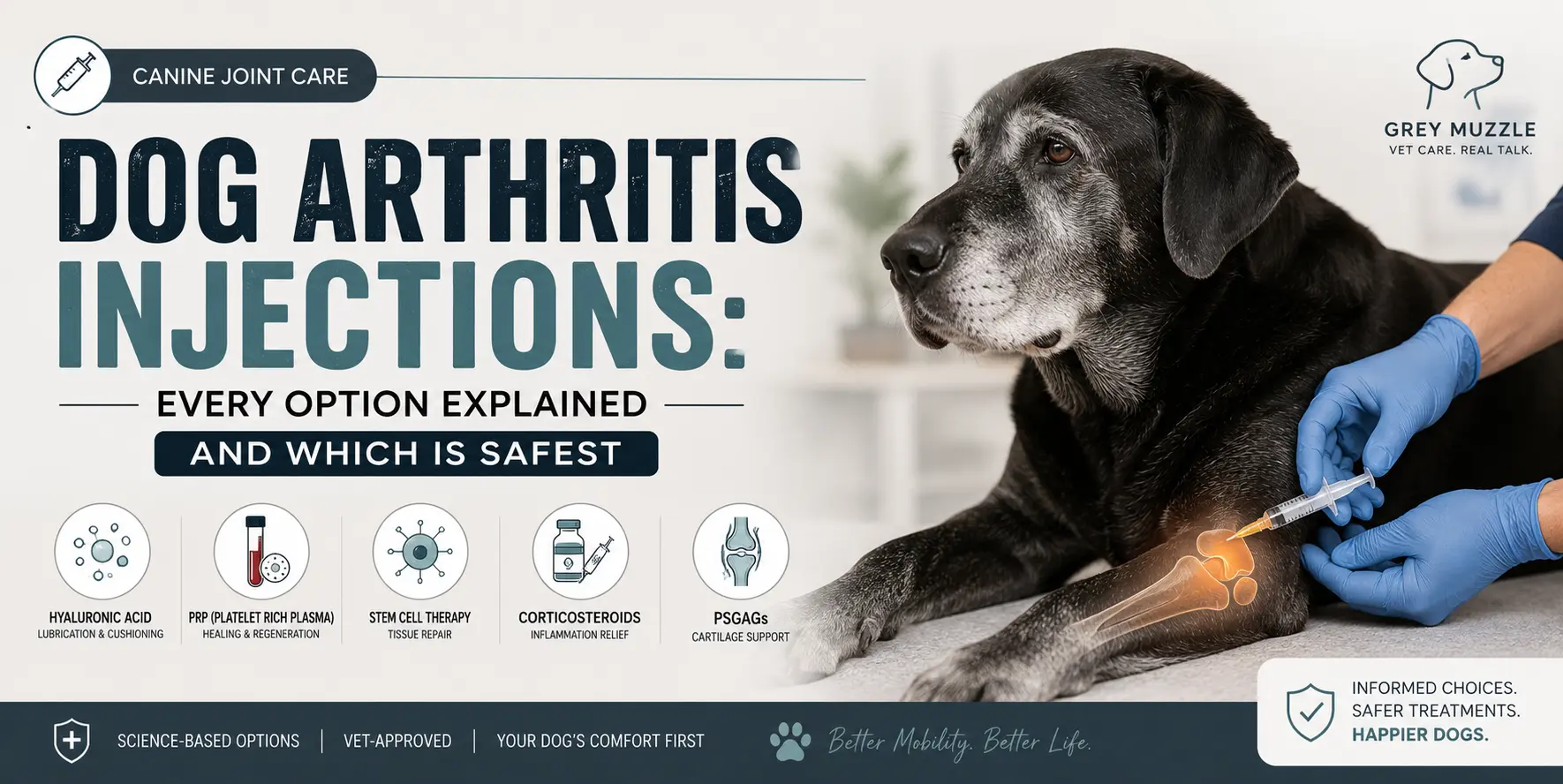
Dog Arthritis Injections: Every Option Explained and Which Is Safest
Confused about dog arthritis injections? Dr. Waleed explains every option — Librela, Adequan, steroids, PRP — what each one does, which is safest, and how to choose.